Retail System Monitoring Tools Examples for Store Managers

Retail system monitoring tools are software solutions that track, analyze, and alert store operators to performance issues across sales, inventory, shelf conditions, and foot traffic in real time. The best retail system monitoring tools examples in 2026 combine AI-driven analytics, computer vision, and automated alerts to replace gut-feel decisions with hard data. Tools like StayinFront, BeMyEye, Bitreport, and Magento 2 Pulse each address a different layer of store operations. For retail managers and small business owners, picking the right monitoring software means fewer stockouts, faster incident response, and measurable gains in operational efficiency. Understanding IT’s role in retail is the foundation for making those tools work.
What are the top retail system monitoring tools examples?
The strongest monitoring tools for retailers combine real-time data capture with automated responses, so problems surface before they cost you revenue. The industry term for this category is retail performance management software, though “retail system monitoring tools” describes the same function from an operational IT perspective.
StayinFront
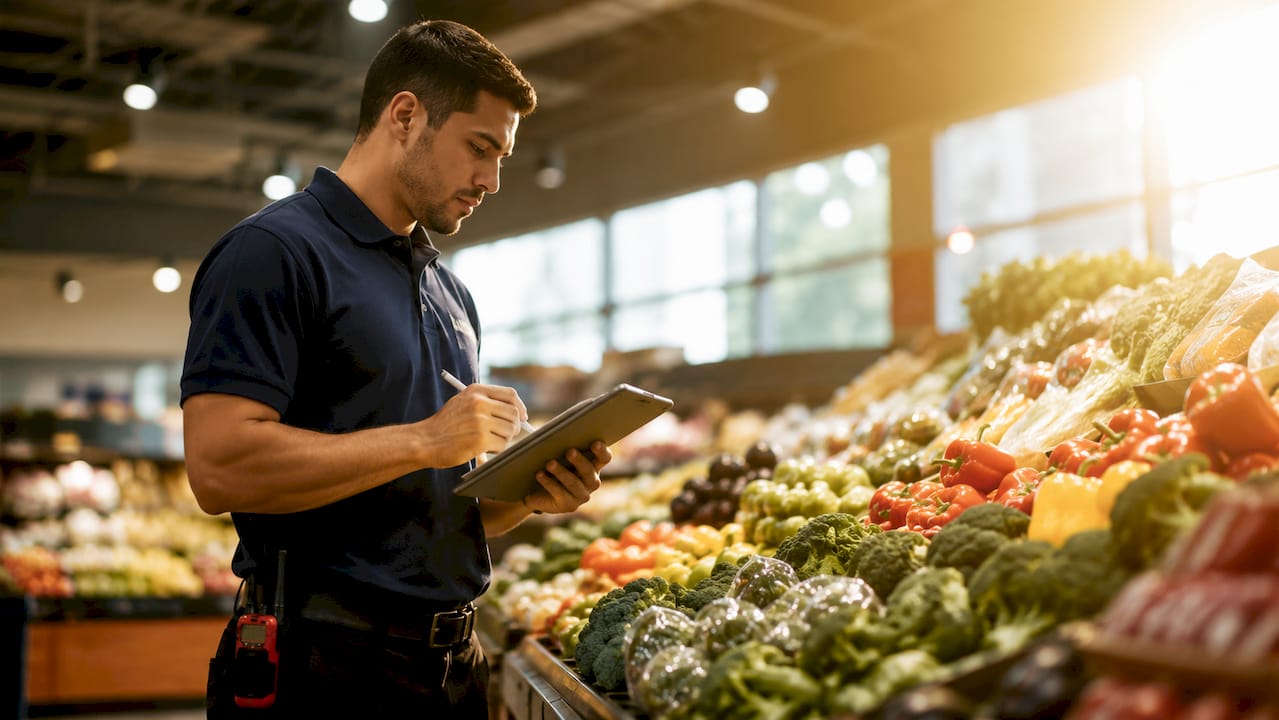
StayinFront is a field execution platform built for consumer goods and retail teams. Its core strengths are AI-driven shelf insights, image recognition for planogram compliance, and route optimization for field reps. A store manager can photograph a shelf, and StayinFront’s AI flags gaps, misplaced items, and pricing errors within seconds. That speed replaces what used to take a manual audit team hours to complete.
BeMyEye
BeMyEye uses a crowd-based audit model combined with zero-training AI. Retailers deploy it to collect in-store data from a network of field contributors, and the AI processes visual feedback instantly. The zero-training requirement means you do not need a data science team to configure it. Small business owners get enterprise-grade shelf intelligence without enterprise-grade setup costs.
Bitreport
Bitreport focuses on task management and live progress tracking inside retail environments. Its auto task trigger feature creates follow-up actions the moment an issue is detected, without waiting for a manager to manually assign work. The interface is intentionally simple, which reduces training time for floor staff. Live progress dashboards let district managers see completion rates across multiple locations simultaneously.
Pro Tip: Before committing to any retail monitoring software, run a two-week pilot on your highest-traffic location. Real-world data from your own store reveals integration gaps that vendor demos never show.
Automated POS monitoring tools
Automated POS monitoring software tracks transaction data continuously and fires alerts the moment a variance crosses a set threshold. Domo’s POS monitoring AI agent maintains rolling week-over-week and year-over-year baselines to reduce false positives. That baseline logic means you get alerted to genuine anomalies, not routine seasonal swings. Store owners receive email alerts with full exception details, bypassing the manual relay chain that delays response by hours.
Magento 2 Pulse
Magento 2 Pulse is a real-time analytics dashboard that updates metrics every 30 seconds, displaying live revenue, order velocity, and refund rates. It triggers automatic alerts when revenue drops or refund spikes appear, giving you a chance to act before customers notice a problem. The dashboard also pulls in marketing spend data, so you can see ROI alongside sales performance in one view. For small and multi-store operators running Magento, this replaces end-of-day reports with live intelligence.
SymphonyAI Store Intelligence
SymphonyAI Store Intelligence applies computer vision to shelf monitoring at scale. Computer vision detects out-of-stocks, pricing errors, and misplaced items in real time without manual audits. Retailers using this approach identify 50–200% more inventory gaps than manual scanning methods. That gap detection rate translates directly into fewer lost sales and more accurate replenishment cycles.
Braingine planogram monitoring
Braingine specializes in planogram compliance using computer vision with automatic shelf detection. Automatic shelf detection via k-means clustering eliminates the need to manually configure a region of interest for each camera. Without that automation, manual calibration can delay monitoring benefits by weeks. Braingine’s approach cuts deployment time significantly, which matters when you are rolling out monitoring across ten or twenty locations.
Flame Analytics
Flame Analytics tracks footfall, dwell time, and conversion rates inside physical stores. The Pompeii footwear brand replaced intuition with traffic analytics to make decisions on product placement and staffing. Continuous traffic data showed Pompeii exactly which zones drove conversions and which were dead space. That kind of evidence shifts store layout decisions from opinion to fact.
How does computer vision enhance retail system monitoring?
Computer vision is the single biggest leap in shelf-level retail monitoring over the past five years. It detects conditions that human auditors miss and does so continuously, not just during scheduled checks.
The core use cases for computer vision in retail include:
Out-of-stock detection: Cameras identify empty shelf facings and trigger replenishment alerts immediately.
Planogram compliance: The system compares actual shelf layout against the approved plan and flags deviations.
Pricing error detection: Labels are read and cross-referenced against the POS database in real time.
Phantom inventory correction: One operator found 15% of out-of-stock issues were caused by phantom inventory, where the system showed stock as available but shelves were empty.
Phantom inventory is a particularly costly blind spot. The system believes product is on the shelf, so it does not trigger a replenishment order. Computer vision catches that mismatch by comparing camera data against stock records directly.
“Retailers using computer vision for shelf monitoring identify 50–200% more inventory gaps than manual scanning.” — SymphonyAI Store Intelligence
Setup speed is a real differentiator between computer vision tools. Manual ROI configuration per camera is a deployment bottleneck that can delay your monitoring program by weeks. Tools that use automatic shelf detection through clustering algorithms remove that friction entirely.
Pro Tip: When evaluating computer vision tools, ask the vendor specifically how shelf zones are configured. If the answer is “manually per camera,” budget extra time and IT resources for the rollout.
How automated POS monitoring improves retail operational responsiveness
Automated POS monitoring removes the human relay chain from exception management. When a variance hits a threshold, the system alerts the store owner or manager directly, with full context attached to the notification.
The steps that define an effective automated POS monitoring workflow are:
Set rolling baselines. The system calculates week-over-week and year-over-year norms so alerts reflect genuine anomalies, not seasonal patterns.
Define variance thresholds. You choose what counts as an alert-worthy deviation, keeping noise low and signal high.
Receive exception alerts by email. Alerts include the specific transaction, location, time, and deviation amount so you can act without digging through reports.
Analyze historical patterns. Recurring exceptions at the same terminal or time of day point to chronic issues worth fixing at the root.
Integrate with existing systems. Centralizing telemetry across multi-cloud and legacy systems with unified dashboards prevents fragmented monitoring and hidden root causes.
The historical pattern step is underused by most small retailers. A single variance alert looks like noise. Ten alerts at the same register on Friday evenings point to a training gap, a hardware fault, or a process failure worth addressing.
Pro Tip: Connect your POS monitoring tool to your retail IT asset management records. When an alert fires, you can immediately check the age and service history of the flagged terminal.
What examples exist of real-time analytics dashboards for retail performance?
Real-time analytics dashboards give retail managers a live view of store performance rather than a backward-looking summary at day’s end. The difference between a 30-second refresh and an end-of-day report can be thousands of dollars in undetected revenue loss.
Dashboard feature | What it shows | Why it matters |
Live revenue tracking | Current sales totals updated every 30 seconds | Catches revenue drops before they compound |
Order velocity | Transaction rate per hour | Flags staffing gaps during peak periods |
Refund spike alerts | Unusual refund activity in real time | Surfaces fraud or product quality issues fast |
Marketing spend ROI | Ad cost vs. sales revenue in one view | Connects campaign performance to store results |
Footfall and dwell time | Customer traffic patterns by zone | Guides product placement and staffing decisions |
Magento 2 Pulse delivers the first four of those features natively. Flame Analytics covers footfall and dwell time for physical store environments. Using both together gives a complete picture of digital and in-store performance.
End-of-day reports are not retail performance analysis tools. They are historical records. A real-time dashboard is a management tool because it gives you time to respond. Small business owners with a single location benefit just as much as multi-store chains, because one bad hour on a Saturday can represent a significant share of weekly revenue.
How to choose the right retail system monitoring tools for your business
Selecting monitoring tools for retailers comes down to matching tool strengths to your highest-impact decisions. Focusing on 2–3 AI retail analytics use cases yields higher impact than spreading attention across every available feature.
Use this checklist to guide your selection:
Identify your top 2–3 pain points. Stockouts, POS variances, and planogram drift are the most common starting points for retail managers.
Check integration requirements. The tool must connect to your existing POS, inventory, or e-commerce platform without a full infrastructure replacement. A bridge device for legacy CCTV and EPOS data can unify monitoring without a costly overhaul.
Match AI capability to your team’s capacity. Zero-training tools like BeMyEye suit small teams. Tools like StayinFront suit larger field operations with dedicated IT support.
Set a clear ROI benchmark before you buy. Define what success looks like in measurable terms: fewer stockouts per week, faster exception response time, or reduced shrink.
Consider retail IT automation benefits before adding manual-heavy tools. Automation compounds over time; manual processes do not.
Budget is a real constraint for small business owners. The good news is that tools like Bitreport and BeMyEye are designed for operators without large IT departments, while enterprise platforms like SymphonyAI and StayinFront serve multi-unit chains with dedicated support teams.
Key takeaways
The most effective retail monitoring strategy combines computer vision for shelf accuracy, automated POS alerts for transaction integrity, and real-time dashboards for live performance visibility.
Point | Details |
Start with 2–3 use cases | Focusing on your highest-impact pain points delivers better results than deploying every available tool. |
Computer vision finds more gaps | Retailers using computer vision identify 50–200% more inventory gaps than manual scanning methods. |
Automated POS alerts save response time | Rolling baselines reduce false positives and deliver exception details directly to store owners. |
Real-time dashboards beat end-of-day reports | A 30-second refresh rate gives managers time to act before problems compound into revenue loss. |
Integration determines success | Tools that connect to existing POS and inventory systems deliver value faster than standalone solutions. |
What I’ve learned from watching retailers adopt monitoring tools
Retail managers often approach monitoring tools the same way they approach a new product launch: with excitement and no clear success metric. I’ve watched store owners deploy three or four platforms simultaneously, then abandon all of them within six months because the data felt overwhelming rather than useful.
The retailers who get real value from these tools do one thing differently. They pick one problem, measure it before they install anything, and then measure it again after 90 days. That discipline turns a monitoring tool from a cost center into a business case. Pompeii’s use of traffic analytics for store decisions is a clean example of that focus paying off in product placement and staffing improvements.
The other mistake I see constantly is treating tool selection as an IT decision rather than an operations decision. The people who know where the gaps are live on the floor, not in the server room. Get your floor managers involved in the evaluation before you sign any contract. Their input will tell you more about fit than any vendor demo.
— Christopher
How Sosasolutionsnyc supports retail monitoring and IT operations in NY and FL
Retail managers in New York and Florida need more than software. They need IT infrastructure that keeps monitoring tools running without interruption, and a support team that responds when something breaks.
Sosasolutionsnyc provides managed IT services built specifically for retail environments, covering proactive system monitoring, POS support, and network reliability across single and multi-location stores. The team handles everything from initial setup to ongoing troubleshooting, so your monitoring tools stay connected and your store stays operational. Retailers looking to open new locations can also access store opening IT solutions that include monitoring tool deployment from day one. If your current IT setup is holding back your store’s performance visibility, Sosasolutionsnyc is the practical next step.
FAQ
What are retail system monitoring tools?
Retail system monitoring tools are software platforms that track store operations including sales, inventory, shelf conditions, and foot traffic in real time. They use AI, computer vision, and automated alerts to surface problems before they affect revenue.
What is a good example of a retail analytics tool?
Flame Analytics and Magento 2 Pulse are strong examples of retail analytics tools. Flame Analytics tracks in-store footfall and dwell time, while Magento 2 Pulse delivers live revenue and order data updated every 30 seconds.
How does computer vision improve retail monitoring?
Computer vision detects out-of-stocks, planogram violations, and phantom inventory automatically, without manual shelf audits. Retailers using computer vision identify 50–200% more inventory gaps than those relying on manual scanning.
How do I choose the right monitoring tools for a small retail store?
Focus on your top two or three operational pain points and select tools that integrate with your existing POS and inventory systems. Zero-training platforms like BeMyEye and task-focused tools like Bitreport are well suited to small teams with limited IT resources.
What is phantom inventory and why does it matter?
Phantom inventory occurs when a system records stock as available but the shelf is actually empty, causing replenishment orders to never trigger. Computer vision tools catch this mismatch by comparing camera data against stock records directly.
Recommended


Comments