What Is Store System Integration for Retailers?
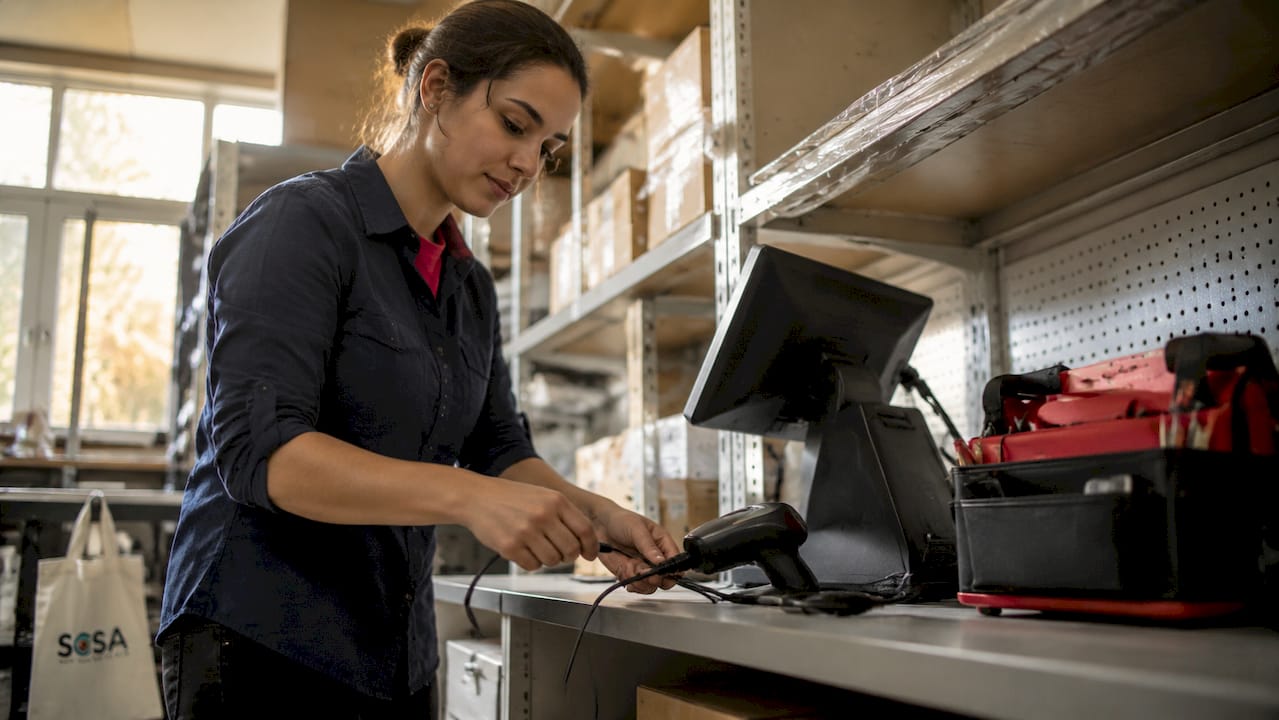
Store system integration is the process of connecting separate retail technologies, such as point-of-sale (POS) systems, ecommerce platforms, inventory management, ERP software, and CRM tools, into one unified operation. The goal is a single source of truth where data flows automatically between systems without manual re-entry. When a customer buys online and picks up in-store, every system involved, from the warehouse to the loyalty program, updates in real time. That level of coordination is what separates high-performing retail operations from ones constantly fighting data gaps and fulfillment errors. Retailers who understand what is store system integration gain a clear advantage in both efficiency and customer experience.
What technical methods enable store system integration?
Three primary technical methods power retail system integration: APIs, middleware or iPaaS platforms, and webhooks. Each serves a different purpose, and most mature retail environments use all three together.
APIs (Application Programming Interfaces) are the most common method. An API lets two systems exchange data directly and in real time. When a customer places an order on your ecommerce site, an API call can instantly update your inventory count in the warehouse management system. API-first platforms allow retailers to launch integrations in days rather than months, which directly cuts time to market for new channels or features.

Middleware and iPaaS (Integration Platform as a Service) act as translators between systems that do not share a common language. Legacy POS hardware, for example, often cannot communicate directly with a modern cloud-based ERP. A middleware layer sits between them, converting data formats and routing messages correctly. This approach is especially valuable for retailers who cannot afford to replace older infrastructure.
Webhooks handle event-driven notifications. Instead of one system constantly asking another “has anything changed?”, a webhook fires automatically when a specific event occurs, such as a payment being confirmed or a shipment leaving the warehouse. This reduces unnecessary system load and keeps data current without constant polling.
APIs: best for real-time, bidirectional data exchange between modern platforms
Middleware or iPaaS: best for connecting legacy systems without replacing them
Webhooks: best for triggering automated actions based on specific events
Native integrations: pre-built connectors between popular retail platforms that require minimal configuration
Hub-and-spoke models: one central integration backbone that all systems connect to, reducing the number of individual point-to-point connections
Pro Tip: Before selecting an integration method, map every system in your store technology stack and identify which ones share a vendor ecosystem. Native integrations between platforms from the same vendor family are almost always faster and cheaper to maintain than custom-built API connections.
What are the benefits of store system integration?
The operational and strategic benefits of store management integration are concrete and measurable. Automation reduces time spent on data retrieval by 60–80% and lowers operational errors by 40–70%. That means fewer staff hours spent reconciling spreadsheets and fewer costly mistakes in order fulfillment.
Real-time inventory visibility is one of the most immediate gains. When your POS, ecommerce platform, and warehouse system all read from the same inventory data, overselling becomes rare. Staff can answer customer questions about stock with confidence. Returns get processed faster because the system already knows the item’s status across every channel.
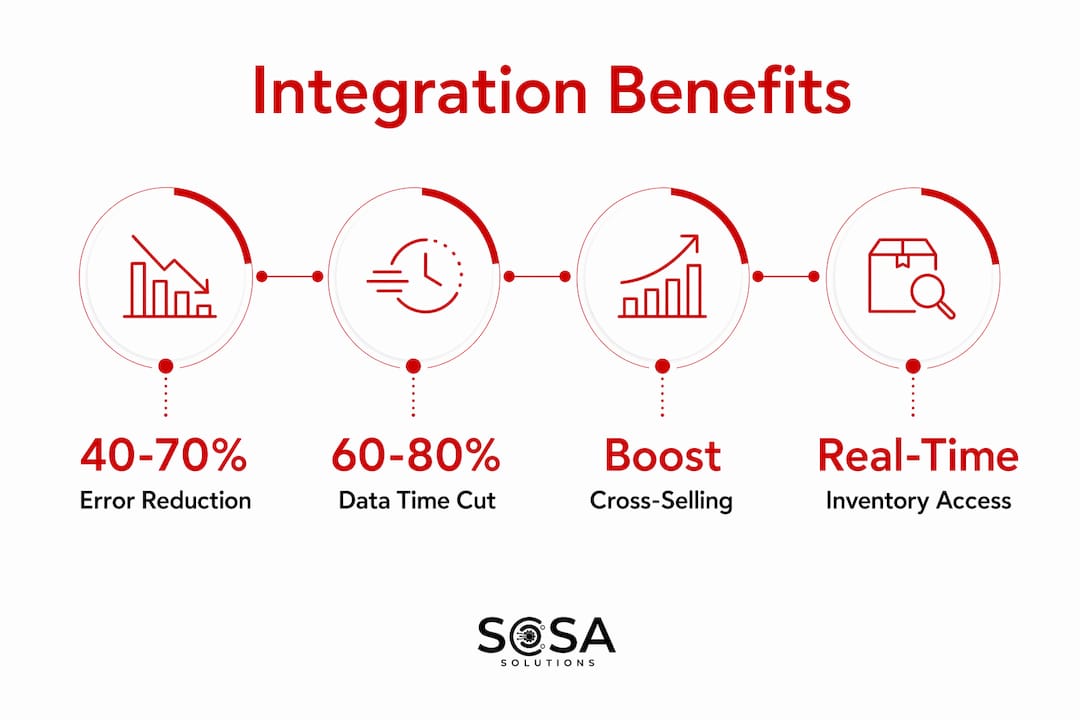
Customer experience improves significantly when channels are connected. Buy online, pick up in-store (BOPIS) is only possible when your ecommerce and POS systems share live inventory data. Integration can boost cross-sell conversions by 15–35% and reduce customer churn by 10–25%. Those numbers reflect what happens when customers get consistent, accurate information regardless of how they shop.
The strategic benefits extend well beyond daily operations:
Unified customer profiles that combine purchase history from all channels into one CRM record
AI-driven analytics that become possible only when clean centralized data feeds machine learning models
Faster channel expansion, because adding a new sales channel to an integrated stack is far simpler than building connections from scratch
Reduced IT maintenance costs over time as point-to-point connections are replaced by a managed integration layer
Better compliance reporting, since integrated systems produce consistent, auditable data trails
Retailers who treat integration as a strategic business lever rather than an IT expense gain the ability to make faster decisions and respond to market shifts with less friction. The importance of integration in stores becomes most visible when a competitor launches a new fulfillment option and you can match it within weeks rather than quarters.
How does store integration work in practice?
Understanding how store integration works in practice requires walking through actual data flows. Here is a typical sequence for an integrated retail operation:
A customer places an order online. The ecommerce platform sends the order data via API to the order management system (OMS). The OMS checks live inventory, confirms availability, and reserves the stock.
Inventory updates instantly. The warehouse management system receives the reservation and removes the units from available stock. The same count reflects on the ecommerce site within seconds, preventing overselling.
The POS system stays in sync. If a store associate sells the last unit in-store, the ecommerce platform receives that update immediately. Customers browsing online see accurate availability without any manual intervention.
A unified customer profile is created or updated. The CRM records the purchase alongside the customer’s previous transactions, regardless of whether they bought in-store, online, or by phone. Marketing teams can now trigger personalized follow-up campaigns based on real purchase behavior.
Fulfillment and returns are handled consistently. When a customer returns an item purchased online to a physical store, the integrated system processes the refund, updates inventory, and adjusts the customer’s loyalty points in one workflow rather than three separate manual steps.
Integrated order fulfillment and returns processing becomes far more reliable when all systems read from the same data source. Staff spend less time on the phone with warehouse teams and more time serving customers on the floor.
Pro Tip: When mapping your integration workflows, always define what a “completed order” means across every system before you build the connection. Retailers who standardize these definitions upstream avoid the most common source of downstream errors: two systems disagreeing on whether an order is fulfilled.
What challenges do retailers face with system integration?
Store technology integration projects fail most often for predictable reasons, and most of those reasons are avoidable with the right planning.
Retailers must standardize definitions of key operational terms, like “fulfilled order,” upstream to avoid chaos despite technically sound integration. Compliance logic embedded early prevents downstream manual corrections and errors. Reversible, event-driven workflows tied to physical execution validations are the standard for resilient retail integration.
The most dangerous technical mistake is building hard-coded, point-to-point connections between every system. A retailer with five platforms and ten direct connections creates a fragile web where changing one system breaks multiple others. Hard-coded connections create technical debt that compounds as the business grows. The solution is a central integration backbone, such as an iPaaS platform, where all systems connect to one hub rather than to each other directly.
Legacy system replacement is another common trap. Ripping out an older POS or ERP to install a modern one carries enormous risk and cost. Layering modern integration platforms over legacy systems preserves operational stability while delivering real-time data flow benefits. This approach lets retailers modernize incrementally without betting the business on a single large migration.
Avoid brittle, point-to-point connections: use a central integration hub instead
Standardize business logic and data definitions before building any technical connection
Layer modern platforms over legacy systems rather than replacing them all at once
Treat integrations as products: version them, monitor them, and plan for updates as systems evolve
Build governance processes so that changes to one system trigger a review of all connected integrations
Upgrading retail store technology works best when integration architecture is treated as a living system, not a one-time project. Retailers who assign ownership of their integration layer to a specific team or partner see far fewer surprise failures.
Key Takeaways
Store system integration is the foundation of efficient retail operations, connecting POS, ecommerce, inventory, and CRM into one data-consistent environment that reduces errors and accelerates every customer-facing workflow.
Point | Details |
Core definition | Integration links POS, ecommerce, inventory, ERP, and CRM into one real-time data environment. |
Primary technical methods | APIs, middleware or iPaaS, and webhooks each serve distinct roles in connecting retail systems. |
Measurable efficiency gains | Automation cuts data retrieval time by 60–80% and reduces operational errors by 40–70%. |
Strategic value | Integrated data enables AI analytics, faster channel launches, and measurable churn reduction. |
Biggest risk to avoid | Hard-coded, point-to-point connections create fragile systems; use a central integration hub instead. |
Why I think most retailers underestimate integration
Most retail IT conversations focus on which platform to buy next. The harder and more valuable question is how the platforms you already own talk to each other. After working through retail technology projects across New York and Florida, the pattern is consistent: the stores with the worst operational problems are rarely running bad software. They are running good software that does not communicate.
The shift I have seen work is treating integration as a product, not a project. A project ends. A product gets maintained, versioned, and improved. Retailers who assign someone to own the integration layer, monitor it, and evolve it alongside the business avoid the technical debt that quietly kills efficiency gains. The role of IT in retail operations has shifted from keeping the lights on to actively enabling business decisions through clean, connected data.
The AI opportunity makes this more urgent, not less. Every AI tool a retailer wants to deploy, whether for demand forecasting, personalized marketing, or dynamic pricing, depends on clean, centralized data. That data only exists if your systems are properly integrated. Retailers who invest in integration now are building the data infrastructure that will power their next five years of growth. Those who do not will find themselves unable to use the tools their competitors are already deploying.
— Christopher
How Sosasolutionsnyc supports retail system integration
Sosasolutionsnyc works with retail businesses across New York and Florida to plan, deploy, and maintain the IT infrastructure that makes store system integration work in practice. From managed IT services that keep integrated systems running reliably, to store opening IT solutions that set up new locations with the right connected technology from day one, Sosasolutionsnyc brings hands-on retail IT expertise to every engagement.

Retail managers and IT leads who want their POS, ecommerce, inventory, and CRM systems working as one connected operation can reach Sosasolutionsnyc for a direct conversation about what their current stack needs. The team handles both on-site and remote support, so the right help is always within reach.
FAQ
What is store system integration in retail?
Store system integration is the process of connecting retail technologies, such as POS, ecommerce, inventory, ERP, and CRM, so they share data automatically and in real time. The goal is a single, consistent data environment that eliminates manual re-entry and reduces errors.
How does store integration work technically?
Integration works through APIs for real-time data exchange, middleware or iPaaS platforms for connecting incompatible systems, and webhooks for event-driven notifications. Most retail environments use a combination of all three methods.
What are the main benefits of system integration for stores?
Integration reduces operational errors by 40–70%, cuts data retrieval time by 60–80%, and can boost cross-sell conversions by 15–35%. It also enables BOPIS fulfillment, unified customer profiles, and AI-driven analytics.
What is the biggest challenge in retail system integration?
The most common failure is building hard-coded, point-to-point connections that become fragile as the business grows. Using a central integration hub and standardizing business logic definitions before building connections prevents most integration failures.
Do retailers need to replace legacy systems to integrate them?
No. Modern integration platforms can layer over legacy systems, delivering real-time data flow and unified workflows without requiring a full system replacement. This approach reduces risk and preserves operational continuity during the transition.
Recommended


Comments