UPS Systems in Retail IT: Minimize Downtime in 2026
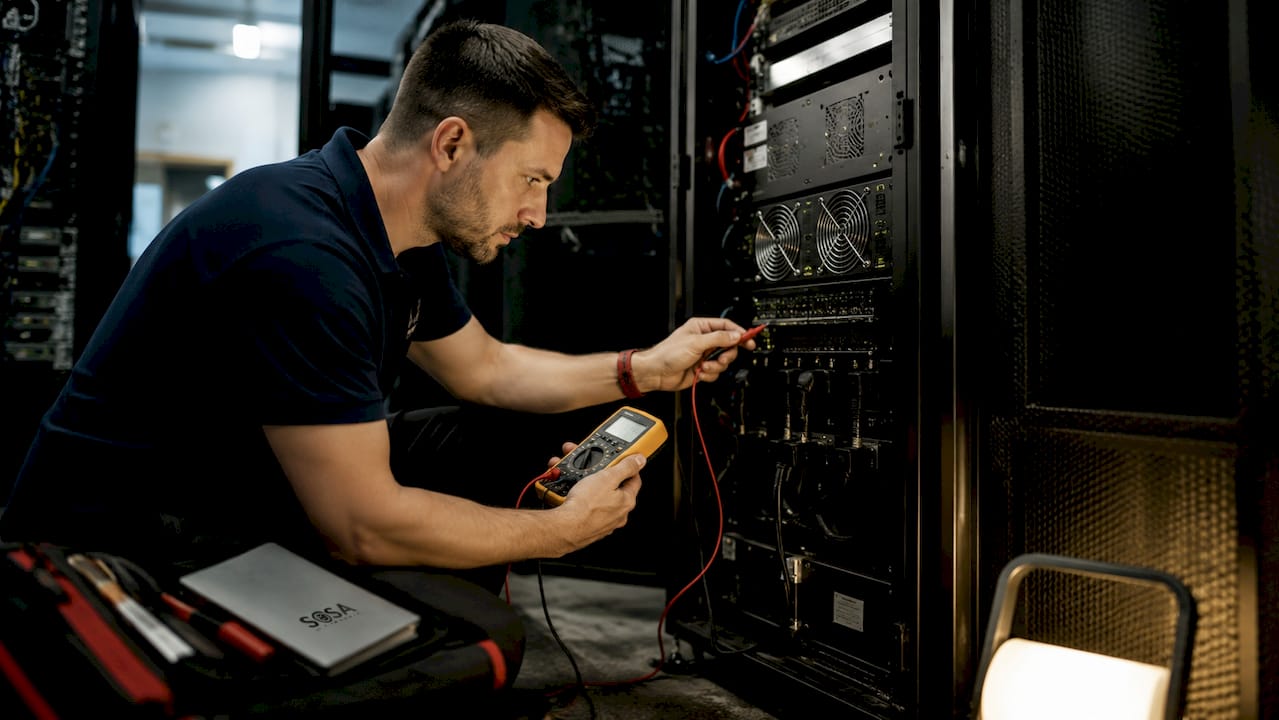
A UPS system, or uninterruptible power supply, is the last line of defense between a power disturbance and a failed transaction at your point of sale. The role of UPS systems in retail IT is to deliver immediate backup power to POS terminals, payment processors, network switches, and servers the moment utility power drops or fluctuates. Without that protection, a single power glitch can corrupt transaction databases, freeze checkout lanes, and cost a store hundreds or thousands of dollars in lost sales within minutes. Retail IT professionals in New York, Florida, and across the country treat UPS deployment as a non-negotiable part of any store’s IT infrastructure.
How do UPS systems protect retail IT infrastructure and minimize downtime?
A properly sized UPS eliminates the gap between a power failure and a store’s ability to keep processing sales. Proper UPS systems can reduce POS downtime by up to 90% during peak hours. That number reflects a direct business impact: fewer abandoned carts, fewer frustrated customers, and fewer calls to your IT helpdesk during your busiest shifts.
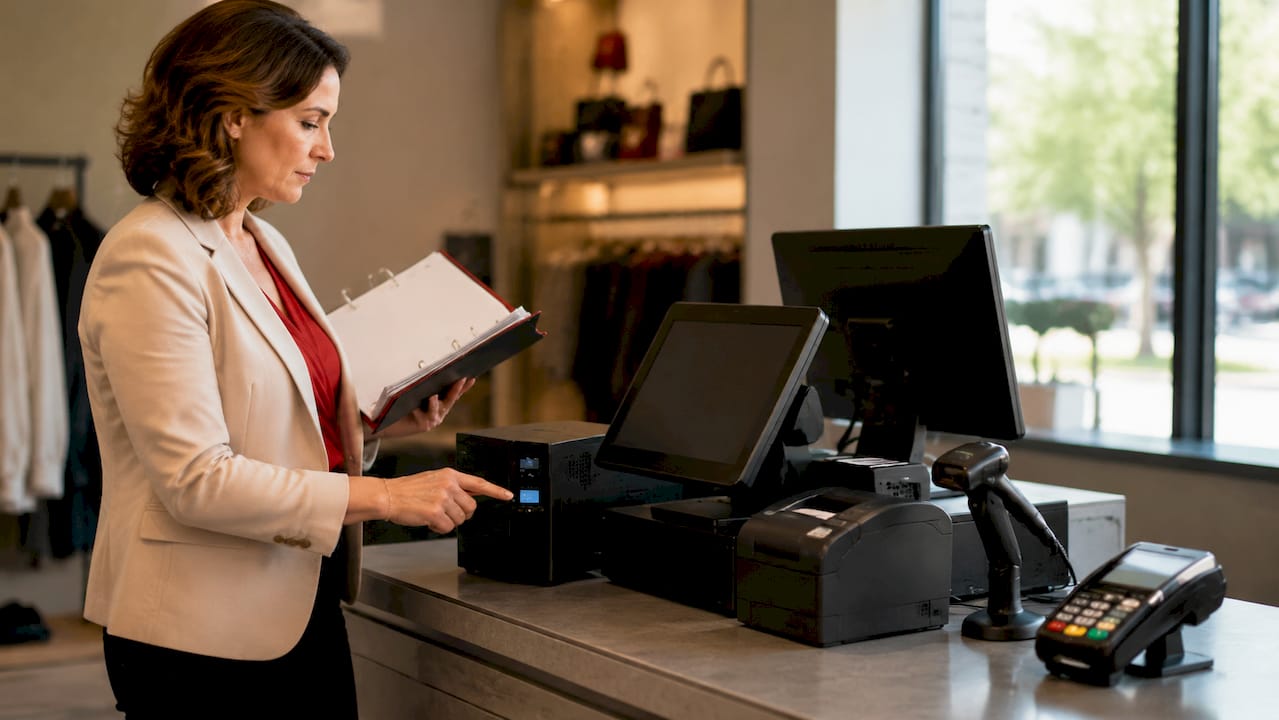
Power protection in retail goes beyond simple backup power. Retail environments run HVAC units, refrigeration compressors, and lighting systems on shared electrical circuits. That shared load creates constant voltage fluctuations and electrical noise. Retail-grade UPS units include advanced surge suppression specifically designed to block that noise from reaching POS databases. Standard consumer UPS units do not provide this level of filtering, which means they can allow “silent” database corruption to occur even when the lights stay on.
The protection UPS systems provide covers several critical failure points:
Transaction data integrity: A sudden power cut during a card transaction can corrupt the POS database, requiring manual reconciliation and potentially losing sale records.
Network continuity: Managed switches and routers lose their configuration state during hard shutdowns. A UPS keeps them running long enough for a clean restart.
Payment processor uptime: Card readers and payment terminals require stable power to maintain their encrypted sessions with payment networks.
Server graceful shutdown: Back-office servers need time to write open files and close database connections before powering down safely.
UPS systems provide a ride-through window of 15–30 minutes, which is enough time for graceful shutdowns or for a generator to come online. That window is the critical feature, not hours of full-floor backup power. Retail IT teams that size UPS units expecting them to run an entire store for extended periods will consistently overspend and underperform.
Pro Tip: Pair your UPS with offline-capable POS software and a backup generator. This layered approach covers both short outages and extended power failures without requiring oversized UPS hardware.
What types of UPS systems are best suited for retail IT?
Not every UPS technology delivers the same level of protection. The three main types are online double-conversion, line-interactive, and offline (standby) UPS. Each handles power events differently, and the differences matter in a retail environment.
Online double-conversion UPS continuously converts incoming AC power to DC and back to AC. Online double-conversion UPS systems provide 0ms transfer time to battery power and deliver pure sine wave output. That zero transfer time means POS terminals and servers never experience even a brief interruption. CyberPower Systems builds this technology into its enterprise retail line. This is the gold standard for protecting sensitive retail IT equipment.
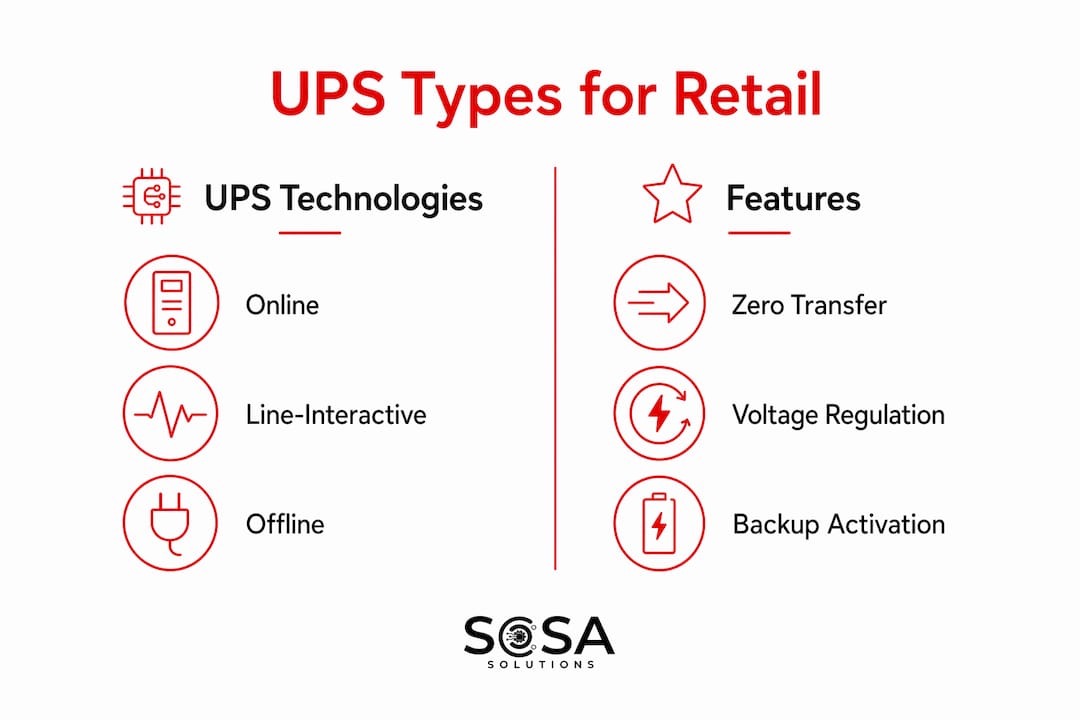
Line-interactive UPS uses an autotransformer to regulate voltage without switching to battery for minor fluctuations. It transfers to battery in 2–4 milliseconds during a full outage. This is acceptable for less sensitive equipment but can cause brief resets in some POS hardware.
Offline (standby) UPS only activates during a full power failure, with transfer times of 4–8 milliseconds. This type is the least expensive but provides the weakest protection in electrically noisy retail environments.
Battery technology also shapes your decision. Lithium-ion UPS systems offer a service life of 5–10 years compared to 1–2 years for traditional lead-acid batteries. Retail back rooms and network closets often run warm, and lithium-ion chemistry handles elevated temperatures far better than lead-acid. The higher upfront cost pays back through reduced battery replacement labor and fewer maintenance cycles.
Form factor matters in retail too. Compact rack-mount and countertop UPS units fit into tight POS stations and small network closets without requiring dedicated equipment rooms. Modular UPS designs allow you to add capacity or swap battery modules without taking the unit offline, which matters in stores that cannot afford maintenance windows.
UPS Type | Transfer Time | Best Use Case | Battery Life | Maintenance |
Online double-conversion | 0ms | POS servers, payment processors | 3–5 years (lead-acid) | Annual battery check |
Line-interactive | 2–4ms | Network switches, secondary systems | 3–4 years | Annual battery check |
Offline (standby) | 4–8ms | Non-critical peripherals | 3–4 years | Biannual check |
Lithium-ion (any topology) | Varies by type | All retail IT, warm environments | 5–10 years | Less frequent |
Pro Tip: When purchasing enterprise UPS for a multi-location retail chain, verify IEC 62040-3 classification and require Factory Acceptance Testing before deployment. This confirms the unit behaves correctly under real load conditions and meets maintainability standards.
How can retail IT teams manage UPS systems across multiple store locations?
Reactive UPS management is the most common and most expensive mistake retail IT teams make. A team that only discovers a failed UPS battery after a store goes dark during a Saturday rush has already lost the battle. Centralized UPS fleet monitoring lets IT teams remotely manage power events, receive battery health alerts, and reboot systems without dispatching a technician.
The practical steps for building a proactive UPS management program look like this:
Deploy network-enabled UPS communication cards. Most enterprise UPS units from Minuteman UPS, CyberPower Systems, and similar vendors support SNMP cards or USB-to-network adapters. These cards expose battery health, load percentage, and runtime estimates to your monitoring platform.
Integrate UPS data into your retail NOC. Feed UPS alerts into your existing network operations center tools. When a battery drops below 50% capacity or a power event occurs, your NOC receives an alert before a failure happens.
Add smart PDUs at each store. Remote outlet control via smart PDUs combined with UPS monitoring lets you schedule planned reboots and cut power to specific devices without visiting the store. This reduces truck rolls significantly across a distributed retail chain.
Schedule predictive battery replacements. Use battery health data to replace batteries before they fail, not after. Lithium-ion units send more accurate state-of-health data than lead-acid, making predictive scheduling more reliable.
Document power event logs per location. Recurring power events at a specific store often signal a wiring problem or an overloaded circuit. Logs give your team the data to escalate to the landlord or utility provider with evidence.
Centralized UPS management platforms integrated with retail NOCs dramatically reduce downtime and service costs across distributed chains. The cost of one emergency truck roll to a store often exceeds the annual cost of a proper remote monitoring setup. Retail IT teams that manage 10 or more locations see the return on centralized monitoring almost immediately.
For teams building out their remote IT support capabilities, UPS monitoring is one of the highest-value additions to a remote management stack.
What emerging trends should retail IT professionals know about UPS systems?
The UPS market for retail is shifting in ways that affect both purchasing decisions and long-term IT strategy. Several trends are reshaping how retail IT teams think about power protection in 2026.
Lithium-ion adoption is accelerating. Lithium-ion UPS systems are becoming a strategic necessity in retail due to their longevity and performance in edge environments. The total cost of ownership over a five-year period is lower than lead-acid even when the purchase price is higher.
Micro data center integration. Retailers are consolidating UPS, cooling, and monitoring into integrated micro data center enclosures at the store level. This approach reduces installation complexity and gives IT teams a single managed unit per location instead of separate components.
Self-checkout and omnichannel demand higher uptime. Self-checkout kiosks, mobile POS devices, and buy-online-pick-up-in-store systems all require non-disruptive power. A single checkout lane going offline during a rush creates a disproportionate customer experience problem.
Energy efficiency is now a procurement criterion. Modern online double-conversion UPS units operate in ECO mode during stable power conditions, reducing energy consumption without sacrificing protection. Retailers with large store counts are factoring UPS efficiency ratings into their sustainability reporting.
Edge computing at the store level increases UPS criticality. As more stores run local analytics, inventory management, and AI-driven systems on edge servers, the consequences of a power event grow. A UPS failure no longer just kills the POS. It can take down the entire store’s computing stack.
The direction is clear: UPS systems are becoming more integrated, more intelligent, and more central to retail IT architecture. Teams that treat UPS as a commodity purchase will face growing exposure as store technology complexity increases.
Key Takeaways
UPS systems are the foundation of retail IT resilience, protecting POS terminals, payment processors, and network equipment from power events that corrupt data and kill sales.
Point | Details |
UPS reduces POS downtime | Proper UPS deployment cuts POS downtime by up to 90% during peak hours. |
Online double-conversion is the standard | Zero transfer time protects sensitive retail IT from even brief power interruptions. |
Lithium-ion outlasts lead-acid | Lithium-ion batteries last 5–10 years versus 1–2 years for lead-acid in warm retail environments. |
Centralized monitoring prevents failures | Remote battery health alerts and smart PDUs eliminate most emergency store visits. |
UPS provides ride-through, not full backup | The 15–30 minute window allows graceful shutdowns; pair with generators for extended outages. |
What I’ve learned from watching retail UPS deployments go wrong
The most common mistake I see retail IT teams make is treating UPS selection as a budget line item rather than a technical decision. A team buys the cheapest unit that fits the wattage spec, installs it, and forgets about it until a failure forces the issue. That approach works fine until a Black Friday power fluctuation corrupts the POS database at 2 p.m.
The second mistake is underestimating electrical noise. Most retail IT professionals focus on full outages. The real damage often comes from the constant low-level voltage noise that HVAC compressors and refrigeration units inject into shared circuits. A consumer-grade UPS passes that noise straight through to your POS hardware. You will not see the damage immediately. You will see it six months later when your database starts throwing errors no one can explain.
Remote monitoring changed everything for the teams I work with. Before centralized UPS management, a dead battery at a store in Florida meant a truck roll. Now it means a five-minute alert response and a scheduled replacement visit. The operational savings are real, and the uptime improvement is measurable. If you manage more than five store locations and you are not monitoring your UPS fleet remotely, you are leaving money on the table.
My honest recommendation: buy online double-conversion, go lithium-ion if your budget allows, and connect every unit to your monitoring stack before the store opens. UPS is not glamorous IT work. It is the work that keeps everything else running.
— Christopher
How Sosasolutionsnyc helps retail businesses protect their IT infrastructure

Sosasolutionsnyc works with retail businesses across New York and Florida to plan, deploy, and manage IT infrastructure that keeps stores running. That includes UPS selection, sizing, and integration into centralized monitoring platforms so your team knows about a battery issue before it becomes a store outage. Whether you are opening a new location or upgrading an existing store’s power protection, Sosasolutionsnyc provides the expertise to get it right the first time. Explore managed IT services built specifically for retail operations, or learn how outsourced IT support reduces the cost of managing distributed store infrastructure.
FAQ
What does a UPS system do for a retail store?
A UPS system provides immediate backup power to POS terminals, payment processors, and network equipment during power outages or fluctuations. It protects transaction data from corruption and keeps checkout lanes running long enough for a safe shutdown or generator startup.
How long does a retail UPS system last on battery?
Most retail UPS systems provide 15–30 minutes of ride-through time, which is enough for graceful shutdowns or generator activation. Extended runtime requires pairing the UPS with a backup generator and offline-capable POS software.
What is the best UPS type for retail POS systems?
Online double-conversion UPS is the best choice for retail POS systems because it delivers zero transfer time and pure sine wave output. CyberPower Systems and Minuteman UPS both offer retail-grade online double-conversion units suited for store environments.
Why do retail environments need special UPS units?
Retail environments generate electrical noise from HVAC and refrigeration equipment that can cause silent database corruption in POS systems. Retail-grade UPS units include advanced surge suppression that consumer-grade units do not provide.
How can IT teams manage UPS systems across multiple store locations?
Centralized UPS fleet monitoring with network-enabled communication cards and smart PDUs allows remote battery health alerts, planned reboots, and power event management without on-site visits. Integrating UPS data into a retail NOC is the most cost-effective approach for chains with multiple locations.
Recommended


Comments