Corporate IT support models for retail businesses
- Sosa Solutions NYC
- May 14
- 10 min read
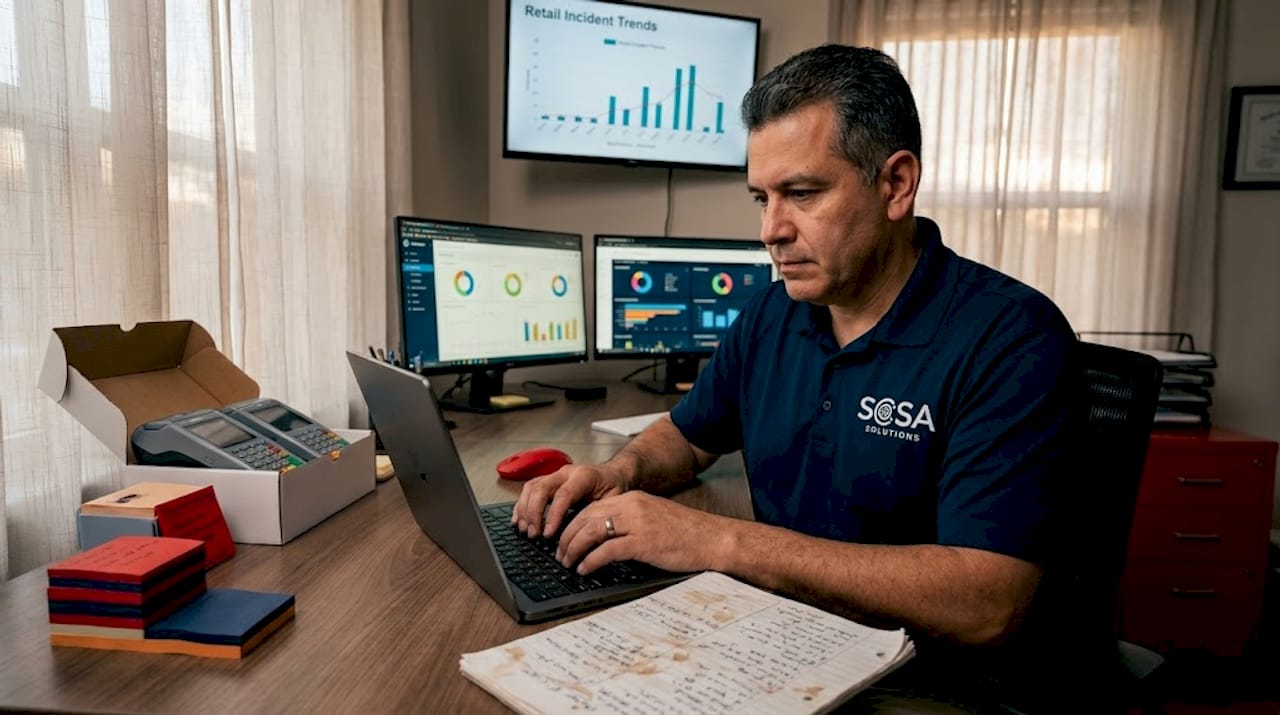
Choosing the wrong IT support model doesn’t just create headaches — it costs you sales. When your point-of-sale system goes down on a Saturday afternoon or your network drops during a holiday rush, the model behind your IT help desk services determines whether that problem gets fixed in 10 minutes or 10 hours. Retail businesses face a fundamentally different set of technical demands than office environments, and the examples of corporate IT support models available today range from fully managed enterprise services to structured tiered frameworks. This guide breaks down each model so you can match the right one to your store’s actual needs.
Table of Contents
Key criteria to evaluate corporate IT support models for retail
Comprehensive enterprise support services: proactive and strategic IT support
ITIL-based service desk models: structured ITSM for faster retail issue resolution
Tiered IT support models: efficient escalation and issue routing for retail operations
Comparing IT support models: strengths, weaknesses, and fit for retail businesses
How to choose the right IT support model for your retail business
Why retail businesses often need specialized IT support models beyond generic MSPs
Sosa Solutions: tailored retail IT support for growing businesses in New York and Florida
Key Takeaways
Point | Details |
Evaluate support criteria | Prioritize 24/7 coverage, POS expertise, and scalability to fit retail operations. |
Enterprise support benefits | Proactive monitoring and strategic alignment reduce downtime and speed issue resolution. |
ITIL process advantages | Standardized workflows improve resolution times and reduce repeat incidents. |
Tiered support efficiency | Structured escalation models optimize ticket routing and expert involvement. |
Retail-specific support | General MSPs often lack necessary retail expertise and 24/7 availability. |
Key criteria to evaluate corporate IT support models for retail
Before you compare options, you need to know what you’re measuring against. A support model that works beautifully for a law firm can be completely wrong for a retail operation with three locations and a Black Friday revenue target.
Here are the non-negotiable criteria for retail IT support:
24/7 availability. Retail doesn’t run on business hours. Retailers need 24/7 helpdesk and POS expertise to avoid transaction losses during peak hours.
POS and payment system expertise. Your IT team needs to understand the difference between a network timeout and a payment processor failure.
Omnichannel support. If you run both in-store and online sales, your support model must cover both environments without gaps.
Scalability. Opening a second or third location shouldn’t require rebuilding your entire support structure.
Defined response times. Vague SLAs are worthless. You need specific commitments: critical issues resolved in under 30 minutes, non-critical in under 4 hours.
When assessing your retail IT support options, also consider your internal IT expertise. If you have no in-house technicians, you need a model that covers everything. If you have a small IT team, a hybrid approach may be more cost-effective.
Numbered evaluation checklist before selecting a model:
Map your peak sales windows (evenings, weekends, holidays).
List every technology system in your store: POS, inventory, networking, security cameras, digital signage.
Identify your biggest past IT failures and what they cost you.
Determine your internal IT headcount and their skill level.
Set a realistic monthly IT support budget with room for incident response.
Pro Tip: Pull your last 12 months of IT incident logs before choosing a model. The pattern of what breaks, when it breaks, and how long it took to fix is the most honest data you have.
Understanding these criteria sets the foundation to explore concrete IT support framework examples tailored for retail.
Comprehensive enterprise support services: proactive and strategic IT support
The enterprise support model is the most thorough option available. Rather than waiting for something to break, it focuses on preventing problems before they affect your operations. For retail businesses with complex tech environments, this is often the highest-value approach.
Key features of this model include:
Continuous monitoring of all systems, including POS terminals, network infrastructure, and cloud applications
Preventive maintenance schedules that address hardware and software vulnerabilities before they cause outages
Clear escalation protocols so critical incidents reach the right expert immediately, not after three transfers
Integration with modern retail tech, including hybrid cloud setups, on-premises servers, and third-party vendor ecosystems
Continuous improvement processes that analyze past incidents to prevent recurrence
Organizations implementing comprehensive enterprise support experience 63% fewer critical incidents and resolve issues 4.5 times faster than those without a structured support strategy.
That’s not a marginal improvement. For a retail business, 4.5 times faster resolution during a POS outage could be the difference between a recoverable incident and a day of lost revenue.
The enterprise model works best when paired with managed enterprise IT support from a provider who understands your specific retail environment. A generic managed service provider monitoring your systems won’t know that your inventory sync runs at 2 a.m. and shouldn’t be interrupted.
Pro Tip: Ask any enterprise support provider for their mean time to resolution (MTTR) data on retail-specific incidents. If they can’t give you that number, they don’t have enough retail experience to protect your business.
ITIL-based service desk models: structured ITSM for faster retail issue resolution
ITIL, which stands for Information Technology Infrastructure Library, is a widely adopted framework for managing IT services. The ITIL framework for ITSM provides a structured set of processes covering how incidents are logged, escalated, resolved, and documented. For retail businesses that experience repetitive IT issues, this model creates real efficiency gains.
How an ITIL-based service desk works in practice:
Incident management captures and prioritizes every issue the moment it’s reported.
Problem management investigates root causes so the same issue doesn’t recur.
Change management controls how updates and new configurations are deployed, preventing outages caused by poorly timed changes.
Knowledge management builds a database of past solutions, so technicians resolve common issues faster every time.
Continual service improvement uses performance data to refine processes over time.
ITIL organizations achieve 42% faster resolution times and a 30% reduction in repeat incidents through standardized processes. For a retailer dealing with daily POS glitches or recurring network drops, that 30% reduction in repeat incidents alone justifies the investment.
ITIL process | Retail benefit | Example |
Incident management | Faster issue triage | POS down during checkout rush |
Problem management | Fewer recurring failures | Repeated Wi-Fi drops at checkout |
Change management | Safer system updates | Deploying new inventory software |
Knowledge management | Faster technician resolution | Known fix for payment terminal error |
The service desk acts as a single point of contact for all IT issues, which eliminates the chaos of staff calling different people for different problems. You can explore ITIL service desk practices that apply directly to retail environments to see how this translates into day-to-day operations.
Pro Tip: If your store generates more than 20 IT tickets per month, an ITIL-based model will pay for itself in reduced downtime within the first quarter.
Tiered IT support models: efficient escalation and issue routing for retail operations
The tiered model is probably the most widely recognized of all the types of IT support models. It organizes support into distinct levels, each handling a specific range of issues. The structure prevents your most specialized technicians from spending time on password resets while complex problems wait in the queue.
Here’s how the tiers break down for a retail operation:
Tier | Who handles it | What it covers | Typical resolution time |
Tier 0 | End user (self-service) | FAQs, password resets, basic guides | Immediate |
Tier 1 | Frontline help desk | Common issues, basic troubleshooting | 30 to 60 minutes |
Tier 2 | Technical specialists | Network issues, software configuration | 2 to 4 hours |
Tier 3 | Senior engineers | Infrastructure, advanced system failures | 4 to 8 hours |
Tier 4 | Vendors/manufacturers | Hardware defects, software bugs | Varies by vendor |
Tier 1 handles 70 to 80% of issues in 30 to 60 minutes, which is essential for retail efficiency. That means the vast majority of your store’s IT problems get resolved quickly, without escalating to expensive senior engineers.
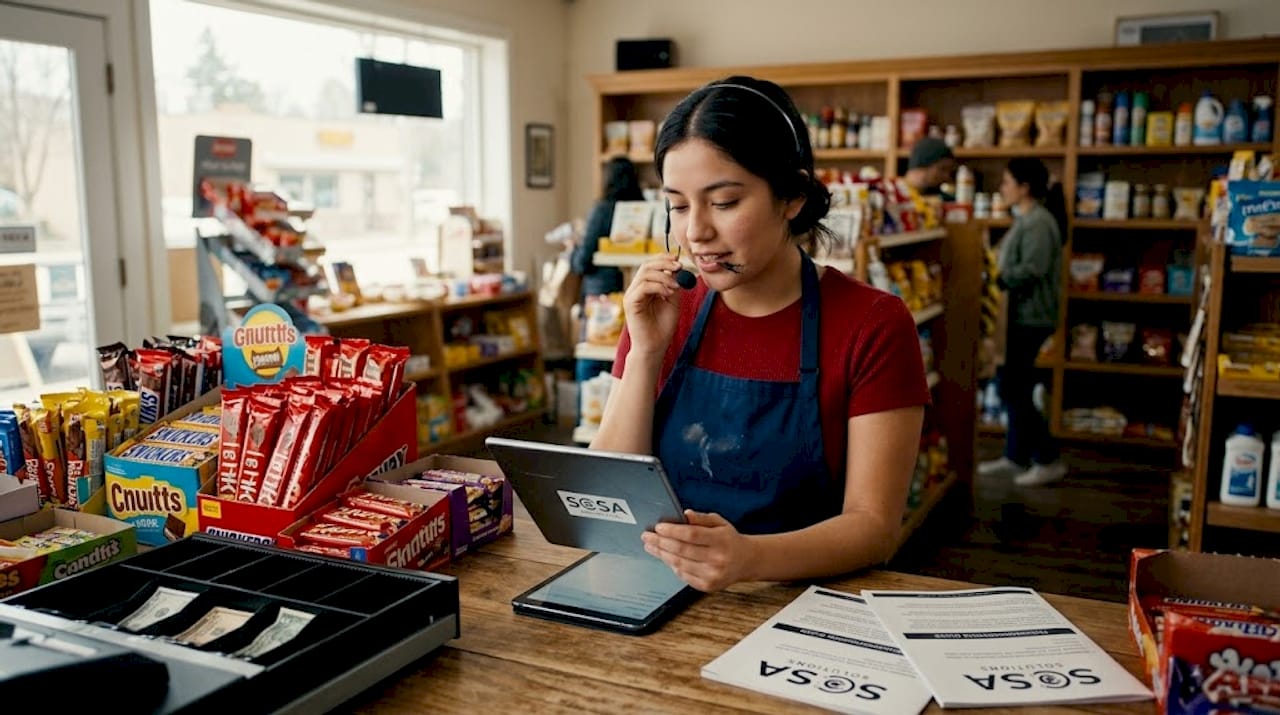
The tiered model also works well for businesses planning to grow. When you open a new location, your tiered IT support model can absorb the added ticket volume at Tier 1 without straining your senior technical staff.
Key advantages for retail operations:
Predictable workflow means no single technician becomes a bottleneck
Self-service options (Tier 0) reduce ticket volume for simple, repeatable issues
Escalation paths are defined in advance, so staff know exactly who to call and when
Cost control improves because expensive expertise is reserved for genuinely complex problems
Pro Tip: Build a Tier 0 knowledge base specifically for your store staff. Include step-by-step guides for the 10 most common issues your team encounters. You’ll cut Tier 1 ticket volume by 20 to 30% within the first month.
Comparing IT support models: strengths, weaknesses, and fit for retail businesses
Having reviewed individual models, comparing them side by side clarifies which best suits your retail business.
Model | Best for | Key strength | Main limitation |
Enterprise support | Complex, multi-location retail | Proactive monitoring, fewest incidents | Higher cost, requires mature vendor |
ITIL service desk | Process-driven retail operations | Structured escalation, fewer repeat issues | Requires process discipline to maintain |
Tiered support | Growing SME retailers | Clear escalation, cost-efficient routing | Less proactive, reactive by nature |
Fewer critical incidents and faster resolution are the defining advantages of enterprise support, but that level of coverage comes with a price point that not every small retailer can justify from day one.
ITIL’s strength is process rigor. Standardized processes improve resolution times and reduce repeat issues, but ITIL requires consistent documentation and staff buy-in to deliver those results. If your team doesn’t follow the process, the benefits disappear.
The tiered model is the most accessible starting point for smaller retailers. It provides operational clarity without requiring a large internal IT team or significant upfront investment.
When comparing your retail IT support comparison options, think about where your business is today and where it will be in 18 months. A model that fits now but can’t scale will cost you more in the long run.
How to choose the right IT support model for your retail business
This decision-making framework ensures your chosen IT support model aligns with your retail business’s unique needs and growth plans.
Define your business goals first. Build your IT strategy backward from business objectives to capabilities. If your goal is to open three new locations in 18 months, your support model must handle that growth.
Audit your current IT environment. List every system, its age, its failure history, and who currently supports it.
Assess your internal capabilities. Be honest about what your team can handle. Overestimating internal capacity is one of the most common and costly mistakes in retail IT planning.
Set a budget range, not a fixed number. IT support costs vary based on incident volume. Build in a buffer for unexpected issues.
Evaluate hybrid options. Many retailers combine an internal IT coordinator with an external managed provider. This gives you on-site presence and 24/7 remote coverage without the cost of a full internal team.
Require SLAs with teeth. Any provider you choose should commit to specific response and resolution times in writing, with financial consequences for missing them.
When choosing IT support for your retail business, the best model is the one that matches your actual risk profile, not the most sophisticated one available.
Why retail businesses often need specialized IT support models beyond generic MSPs
Here’s something most IT articles won’t tell you directly: most general-purpose managed service providers are not built for retail. They’re built for offices. Their monitoring tools, escalation procedures, and staff expertise are designed around email servers, VPNs, and business applications. That’s a fundamentally different environment from a retail floor.
Local MSPs lack POS and omnichannel experience; retail-specific support with cellular failover and 24/7 coverage prevents the outages that general providers simply don’t anticipate. A generic MSP that operates 9 to 5 Monday through Friday has no business being the sole IT support for a store that runs 7 days a week and processes its highest transaction volume on Sunday afternoons.
The difference shows up in the details. A retail-focused IT provider knows that your network needs a cellular failover so that if your primary internet connection drops, your POS terminals stay online through a backup connection. A general MSP often doesn’t configure that because office environments rarely need it.
The same logic applies to omnichannel integration. If your in-store inventory system needs to sync with your e-commerce platform in real time, your IT support team needs to understand both environments. Most general providers understand one or the other.
Investing in retail-specific IT support isn’t a premium luxury. For a retailer processing hundreds of transactions per day, it’s a direct revenue protection measure. The cost of one major outage during peak hours almost always exceeds the annual cost difference between a generic MSP and a retail-specialized provider.
Sosa Solutions: tailored retail IT support for growing businesses in New York and Florida
The models covered in this article only deliver results when the provider behind them actually understands retail. That’s where the right partner makes all the difference.
Sosa Solutions delivers retail IT support services built specifically for small to medium-sized retail businesses across New York and Florida. From POS system setup and omnichannel networking to cellular failover and 24/7 incident response, every service is designed around the realities of running a retail operation. Whether you’re managing an existing store or preparing to launch a new one, their managed IT services and store opening IT solutions give you the coverage and expertise your business needs to stay operational when it matters most.
Frequently asked questions
What is a corporate IT support model?
A corporate IT support model defines how technical support is structured and delivered within a business, including service levels, escalation protocols, and whether support is handled internally, outsourced, or through a hybrid arrangement.
Why is 24/7 IT support important for retail businesses?
Retail businesses operate outside standard business hours, and transaction losses during peak hours are a direct revenue risk, making round-the-clock monitoring and rapid response essential for any retail IT support model.
How does ITIL improve retail IT support?
ITIL provides standardized incident and problem management processes that achieve 42% faster resolution and a 30% reduction in repeat incidents, directly reducing the downtime that costs retailers money.
What distinguishes retail-specific IT support from general MSP services?
Retail-specific IT support includes POS expertise, 24/7 coverage aligned to store hours, cellular failover for network resiliency, and omnichannel integration experience that general MSPs typically lack because their focus is office environments.
How do I decide which IT support model fits my retail business?
Start with your business objectives and work backward through your technology needs, internal capabilities, budget, and peak operational hours to find the model whose features and scalability match your actual risk profile.
Recommended
Comments